

Different accounts of Joseph Smith’s First Vision and the perceptions of God that are related to it.
[Notes for a talk given by Sandra Tanner on Nov. 8, 1998, Salt Lake City, Utah]

Basic questions about Joseph Smith’s first vision:
- WHEN did it happen—what year?
- WHERE were the Smiths living—in which house, Palmyra or Manchester?
- WHY did he pray—was it due to a revival?
- WHAT did he learn—the nature of God, all churches wrong, sins forgiven?
- WHEN did he tell others and what were their objections?
(Not all of these issues will be discussed in this article. See the reading list at the end for further information.)

“Our entire case as members of The Church of Jesus Christ of Latter-day Saints rests on the validity of this glorious First Vision.”
President Gordon B. Hinckley
(Ensign, Nov. 1998, p. 71)
Speaking at the October 1998 Conference of the LDS Church, President Gordon B. Hinckley declared:
Question 1: What is the Mormon doctrine of Deity, of God?
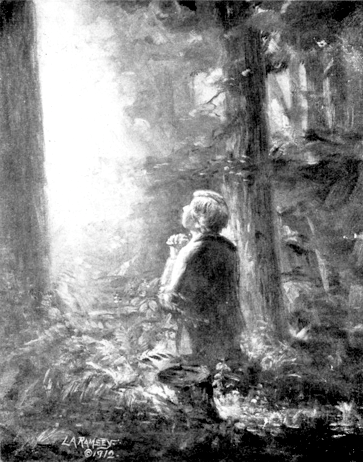
Since the time of the First Vision people have raised this question, and they continue to raise it and will do so for so long as they believe in the God of their tradition, while we bear testimony of the God of modern revelation. . . . We do not accept the Athanasian Creed. We do not accept the Nicene Creed, nor any other creed based on tradition and the conclusions of men. . . . We do accept, as the basis of our doctrine, the statement of the Prophet Joseph Smith that when he prayed for wisdom in the woods, “the light rested upon me [and] I saw two Personages, whose brightness and glory defy all description, standing above me in the air. One of them spake unto me, calling me by name and said, pointing to the other—This is my Beloved Son. Hear Him!” (Joseph Smith—History 1:17).
Two beings of substance were before him. He saw them. . . . They were not amorphous spirits. . . . They were beings of flesh and bone. . . .
Our entire case as members of The Church of Jesus Christ of Latter-day Saints rests on the validity of this glorious First Vision. . . . Nothing on which we base our doctrine, nothing we teach, nothing we live by is of greater importance than this initial declaration. I submit that if Joseph Smith talked with God the Father and His Beloved Son, then all else of which he spoke is true. This is the hinge on which turns the gate that leads to the path of salvation and eternal life. (Ensign, Nov. 1998, pp. 70-71)
[Bold in quotations is added for emphasis and does not appear in originals.]
In spite of Mr. Hinckley’s statement, the written records of the church show that the First Vision stands on very uncertain ground. The First Vision story and the LDS doctrine of God have continually evolved. The LDS Church’s current position was not the position of the church in 1830 or 1835.
1820
(First Vision)
Joseph Smith claimed, according to his 1842 published history, that due to a revival in the neighborhood he went into the woods to pray and asked God which church to join. Supposedly, two heavenly beings appeared and told him that all of the churches were wrong. From this time forward he supposedly understood and taught that God and Jesus each had a physical body and were totally separate deities.
However, many problems surface when the documents are studied. For one thing, there is no historical evidence that such a revival happened that year in his town. This is documented in Inventing Mormonism. He later claimed that he received severe persecution during his early years for stating that he had this vision, yet there is no published mention of this vision by either Mormons or non-Mormons until 1840. Also, there is no evidence that he told people between 1820 and 1838 that he had actually seen God in this vision. There is no evidence that he was teaching that God and Jesus were totally separate deities with bodies prior to 1838.
1830
(Book of Mormon published)
The Book of Mormon teaches:
- Modalism — Three modes or expressions of one god.1
- The Father, Son and Holy Ghost are one God.
(2 Nephi 31:21; Mormon 7:7; Mosiah 15:1-5; 3 Nephi 11:27) - The Father and Son are the same person.
(Ether 3:14; Title Page: “. . . to the convincing of the Jew and Gentile that Jesus is the Christ, the ETERNAL GOD, manifesting himself unto all nations.”) - God is a spirit (Alma 18:26-28; 22:8-11), no teaching that the Father has a physical body.
Also, in the Pearl of Great Price, Book of Moses, the Creation story portrays God and Christ as one.
In his Inspired Revision of the Bible (or Joseph Smith Translation, JST), Smith changed verses to make the father and son one:2
Luke 10:22 (KJV)
“. . . no man knoweth who the Son is, but the Father; and who the Father is, but the Son . . .”
Luke 10:23 (JST)
“. . . no man knoweth that the Son is the Father, and the Father is the Son, but him to whom the Son will reveal it.”
1832
(Smith’s first draft of his history)
In the first draft of Joseph Smith’s history only Jesus was mentioned as appearing.3 This draft was written in Joseph Smith’s own hand.
See photos and typescripts at:
Joseph Smith’s 1832 Handwritten First Vision
History, circa Summer 1832 (Joseph Smith Papers website)
- Smith started serious study of the scriptures at age 12.
- Determined all churches were wrong.
- No mention of a revival.
- At age 15 (in his 16th year) he went into the grove and had a vision of the Saviour.
- His sins were forgiven. He reverted back to old ways.
- At age 17 he again prayed and an angel appeared telling him about the plates and announced he was forgiven of his sins.
Smith dictated Section 84 of the Doctrine and Covenants (D&C) stating that no man can see the face of God without the priesthood.
1834
(First history of Mormonism published)
- Oliver Cowdery, with the help of Joseph Smith, published the first history of Mormonism in the LDS paper Messenger and Advocate, Kirtland, Ohio, December 1834, Vol. 1, No. 3, pp. 42, 78, 79 (see below).
He began Smith’s story with the angel vision in the bedroom in 1823. On page 42 Cowdery started the account when Smith was 14 (in his 15th year) telling of a revival in the area. He named Mr.Lane, of the Methodist Church, as participating in a great revival. Large additions of members were made to the Methodist, Presbyterian and Baptist churches. During this revival his mother, one sister and two brothers joined the Presbyterians.
On page 78 Cowdery corrected Smith’s age, stating Smith would have been in his 17th year (16) not his 15th year (14) and placed the date at “1823.” - Amidst the religious excitement of this revival Smith prayed to know “if a Supreme being did exist, to have an assurance that he was accepted of him.”
His prayer was answered on September 21, 1823, when a “messenger” appeared to him in his bedroom “to deliver a special message, and to witness to him that his sins were forgiven, and that his prayers were heard; . . .” - In Cowdery’s history there was no mention of a vision prior to the angel coming to Smith’s bedroom.
Photos: Messenger and Advocate,
Dec. 1834, Vol. 1, No. 3, pp. 42, 78, 79
(click images to view)
(typescript is available here)


1835
- Binitarian view embraced — two in godhead, Holy Spirit is the mind of God.
- God is not described as having a physical body:
“The Father being a personage of spirit, . . . The Son, . . . a personage of tabernacle.” (Doctrine and Covenants [1835 edition, p. 53], Lectures on Faith, lecture 5)
Joseph related his first vision to two different men. Both accounts relate seeing angels but not God or Jesus.
- The November 9, 1835 account, was related by Joseph Smith to “Joshua the Jewish Minister,” in which Smith claimed he “saw many angels in this vision.”
This account appeared in the serial printing of Smith’s history in the Millennial Star, Vol. 15, p. 396. However, it has been deleted from the History of the Church, Vol. 2, p. 304.4- Smith didn’t know which church was teaching the truth.
- No mention of a revival.
- He went into the grove to pray.
- Two personages appeared—the second one “testified unto me that Jesus Christ is the Son of God.”
- He “saw many angels in this vision.”
- At age 17 he “saw another vision of angels”—one told him about the gold plates.
- The November 14, 1835 account was related to Erastus Holmes, in which Smith claimed that he “. . . received the first visitation of Angels which was when I was about 14 years old . . .”5
This account was later printed in the Deseret News, May 29, 1852, but has been changed in the History of the Church, Vol. 2, p. 312. It now reads “my first vision” instead of “visitation of angels.”- Later Smith received the vision regarding the plates.
- Various articles that attacked Joseph Smith’s claims never raised the issue of the First Vision or that he claimed to see God. “Campbell and others before 1835 objected principally to claims of authority, modern revelation, miracles, and communitarianism but not to the doctrines of God and man.” (Sunstone, July/Aug. 1980, p. 27)
- Smith began studying Hebrew. This eventually impacted his teaching on Elohim and plural gods.6
1837
- Changes relating to the godhead were made in the second edition of the Book of Mormon. The phrase “the son of ” was added to several verses to distinguish between the Father and Son. (i.e. 1 Nephi 11:18, 21, 32 and 1 Nephi 13:40)
1838
- Joseph started working on his history but it wasn’t published until 1842.
1840
- Orson Pratt published A Interesting Account of Several Remarkable Visions (Scotland, 1840). He related that when Smith was “about fourteen or fifteen years old” he was praying in the woods when “two glorious personages” appeared. But they were not specifically identified as the Father and Son.
1842
- Another First Vision account is contained in a letter to a Mr. John Wentworth, which was published in the Times and Seasons, Nauvoo, Ill., March 1, 1842, Vol. 3, No. 9, pp. 706-710.7
- At about 14 Smith started wondering which church was right.
- He went into the grove to pray.
- “Two glorious personages” appeared and informed him that none of the churches “was acknowledged of God.” He was told not to join any of them but to wait for further revelation.
- In 1823 an angel appeared to tell him about the gold plates.
- Smith published his 1838-39 account in the Times and Seasons, Nauvoo, Ill., March 15, 1842, Vol. 3, No. 10, pp. 727-728; pp. 748-749; pp. 753.
- When he was in his 15th year (age 14) his mother, sister, and two brothers joined the Presbyterian Church due to a revival in the neighborhood. The revival started with the Methodists and soon spread to the Presbyterians and Baptists.
- Joseph went into the grove to ask God which church to join “for at this time it had never entered my heart that all were wrong.” Two beings appeared. One spoke, pointed to the other being and said “This is my beloved Son, hear him.”
- He was told to join none of the churches “for they were all wrong . . . all their creeds were an abomination in his sight; . . .”
- On Sept. 21, 1823 he again prayed and the angel “Nephi” appeared to him to tell him of the plates (“Nephi” was later changed to “Moroni” in the History of the Church, Vol. 1, p. 11).
- Joseph wrote a prayer in 1842 referring to the Father as Jehovah and Elohim.8 Current Mormonism teaches that Jehovah is Christ and Elohim is the Father.
- Thus Tritheism — belief in three gods — was now embraced.
- Smith printed the Book of Abraham in the Times and Seasons. The creation story is told as the work of a council of gods.
1843
- Smith dictated section 130 of the Doctrine and Covenants, containing a revelation that taught that God and Jesus both have bodies but not the Holy Ghost.
If Joseph Smith had actually been teaching since 1820 that God had a body why did he need this revelation?
- Smith’s temple ritual was introduced. Elohim, Jehovah and Michael were depicted as creators. But these terms were not necessarily interpreted the same as Mormonism uses them today.9
1844
- Smith wrote a chapter on Mormonism for the book, An Original History of the Religious Denominations at Present Existing in the United States, edited by Daniel Rupp. But he did not state that he saw God and Christ in the vision: “I retired to a secret place, and began to call upon the Lord. . . . two personages, who exactly resembled each other in features and likeness, surrounded with a brilliant light, which eclipsed the sun at noonday. They told me that all the religious denominations were believing in incorrect doctrines, . . .” (pp. 404-405)
- Smith gave sermons in April and June on the plurality of gods.
1845
- Lucy Smith started her autobiography. Her preliminary draft had nothing about Joseph having a vision in 1820.
The only event she mentions for Joseph at this time was that someone took a shot at him. She recounted that during the third harvest (1823) the family discussed the contentions of the various churches. That night “an angel” appeared to Joseph, saying: “I perceive that you are enquiring in your mind which is the true church[,] there is not a true church on Earth[,]”
(Early Mormon Documents, Vol. 1, pp. 289-290)

1852
- Brigham Young preached his first Adam-God sermon. Young held to this doctrine the rest of his life, dying in 1877. Some of the brethren continued to believe the Adam-God doctrine for years afterward. 10
1853
- Lucy Smith’s family history was printed. She did not personally recount anything concerning an 1820 vision. Instead, she simply inserted Joseph’s account from the Times and Seasons.
1854
- Speaking at the LDS conference of April 6, 1854, Apostle Orson Hyde stated that the restoration of the gospel was due to “angels” rather than coming directly from “the Saviour”:
“Some one may say, ‘If this work of the last days be true, why did not the Saviour come himself to communicate this intelligence to the world?’ Because to the angels was committed the power of reaping the earth, and it was committed to none else.”
(Journal of Discourses, Vol. 6, p. 335)

1855
LDS President Brigham Young taught on February 18, 1855:
. . . so it was in the advent of this new dispensation. . . . The messenger did not come to an eminent divine . . . The Lord did not come with the armies of heaven, . . . But He did send His angel to this same obscure person, Joseph Smith jun., who afterwards became a Prophet, Seer, and Revelator, and informed him that he should not join any of the religious sects of the day, . . . (Journal of Discourses, Vol. 2, p. 171)
A few days later Apostle Wilford Woodruff preached:
That same organization and Gospel that Christ died for, and the Apostles spilled their blood to vindicate, is again established in this generation. How did it come? By the ministering of an holy angel from God, . . . The angel taught Joseph Smith those principles which are necessary for the salvation of the world; . . . He told him the Gospel was not among men, and that there was not a true organization of His kingdom in the world, . . . This man to whom the angel appeared obeyed the Gospel; . . . (Journal of Discourses, Vol. 2, pp. 196-197)
1857
LDS Apostle Heber C. Kimball, speaking on November 8, 1857, seemed to be oblivious to any vision where Smith saw God and Christ:
Do you suppose that God in person called upon Joseph Smith, our Prophet? God called upon him; but God did not come himself and call, but he sent Peter to do it. Do you not see? He sent Peter and sent Moroni to Joseph, and told him that he had got the plates.” (Journal of Discourses, Vol. 6, p. 29)
1860
- John Hyde, a former Mormon, is a good example of the confusion regarding who appeared to Smith. In his book, Mormonism: Its Leaders and Designs, p. 199, he related: “1820 . . . April. . . . He [Joseph] asserts that God the Father and Jesus Christ came to him from the heavens.”
However, on p. 240 he states: “Joseph Smith, born in 1805, sees an angel in 1820, who tells him his sins are forgiven.”
1863
Apostle John Taylor explained in a sermon March 1, 1863:
How did this state of things called Mormonism originate? We read that an angel came down and revealed himself to Joseph Smith and manifested unto him in vision the true position of the world in a religious point of view. (Journal of Discourses, Vol. 10, p. 127)
LDS Apostle George A. Smith preached on November 15, 1863:
When Joseph Smith was about fourteen or fifteen years old, . . . he went humbly before the Lord and inquired of Him, and the Lord answered his prayer, and revealed to Joseph, by the ministration of angels, the true condition of the religious world. When the holy angel appeared, Joseph inquired which of all these denominations was right and which he should join, and was told they were all wrong, . . . (Journal of Discourses, Vol. 12, pp. 333-334)
1864
One year later, November 15, 1864, Apostle Smith seemed to be describing the vision in a more traditional way:
When the Lord appeared to Joseph Smith and manifested unto him a knowledge pertaining to the coming forth of the Book of Mormon and the work of the last days, Satan came also with his power . . . He [Joseph] thus describes the incident: “In the spring of 1820, . . . I saw a pillar of light . . . I saw two personages . . . ‘This is my beloved son, hear him.’” . . . just at the time that God was revealing unto his servant Joseph to raise up men to bear testimony of the principles of the Gospel . . . Satan was at work stirring up the hearts of the children of men . . . (Journal of Discourses, Vol. 11, pp. 1-2)
1869
Five years later Apostle Smith again referred to Smith’s First Vision while speaking on June 20, 1869:
He sought the Lord by day and by night, and was enlightened by the vision of an holy angel. When this personage appeared to him, of his first inquiries was, “Which of the denominations of Christians in the vicinity was right?” (Journal of Discourses, Vol. 13, pp. 77-78)
Speaking on December 19, 1869, Orson Pratt taught:
By and by an obscure individual, a young man, rose up, and, in the midst of all Christendom, proclaimed the startling news that God had sent an angel to him; . . . This young man, some four years afterwards, was visited again by a holy angel. (Journal of Discourses, Vol. 13, pp. 65-66)
1871
On March 19, 1871 Orson Pratt preached:
He went out to pray, being then a little over fourteen years of age, . . . He saw in this light two glorious personages, one of whom spoke to him, pointing to the other, saying, “This is my beloved Son, hear ye him.” . . . When these persons interrogated him to know what he desired, he answered and said, “Lord show me which is the true church.” He was then informed by one of these personages that there was no true church upon the face of the whole earth; . . . The vision withdrew; the personages attending and the light withdrew. . . . he knew that God had manifested himself to him; . . . (Journal of Discourses, Vol. 14, pp. 140-141)
Although Orson Pratt’s sermon on March 19, 1871 could be interpreted as either angels or God, his sermon on December 10 of that year clearly identified the messengers as angels:
Here was Joseph Smith, a boy, . . . he was only between fourteen and fifteen years of age. . . . Would he stand forth and bear testimony that he had seen with his own eyes a messenger of light and glory, and that he heard the words of his mouth as they dropped from his lips and had received a message from the Most High, at that early age? And then . . . to have the finger of scorn pointed at him, . . . “No visions in our day, no angels come in our day, . . .” and still continue to testify, . . . that God had sent his angel from heaven. (Journal of Discourses, Vol. 14, p. 262)
1874
Speaking on June 23, 1874, President Brigham Young still seemed to be identifying the personages as messengers rather than God and Christ:
Do we believe that the Lord sent his messengers to Joseph Smith, and commanded him to refrain from joining any Christian church, and to refrain from the wickedness he saw in the churches, and finally delivered to him a message informing him that the Lord was about to establish his kingdom on the earth, and led him on step by step until he gave him the revelation concerning the plates? Yes, this is all correct. (Journal of Discourses, Vol. 18, p. 239)
Later that year, on September 20, 1874, Orson Pratt preached:
Joseph Smith, . . . was a boy about fourteen years of age at the time the Lord first revealed himself in a very marvelous manner to him. . . . he saw nothing excepting the light and two glorious personages standing before him in the midst of this light. One of these personages, pointing to the other, said—“Behold my beloved Son, hear ye him.” . . . After this, power was given to Mr. Smith to speak, and in answer to an inquiry by the Lord as to what he desired, he said that he desired to know which was the true Church, . . . immediately after receiving it, he began to relate it to some of his nearest friends, and he was told by some of the ministers who came to him to enquire about it, that there was no such thing as the visitation of heavenly messengers, that God gave no new revelation . . . he knew that he had seen this light, that he had beheld these two personages, and that he had heard the voice of one of them; . . . and he continued to testify that God had made himself manifest to him; . . . (Journal of Discourses, Vol. 17, pp. 278-280)
1876
- LDS Apostle John Taylor, speaking December 31, 1876, clearly identified the personages as “the Father and the Son ”

“. . . the Father and the Son appeared to him, arrayed in glory, . . . ‘This is my beloved Son, in whom I am well pleased . . .’”
Apostle John Taylor,
Journal of Discourses, Vol. 18, p. 326
1879
- Three years later, however, on March 2, 1879, Apostle Taylor then identified the personage who told Joseph to join none of the churches as an angel: “. . . Joseph asked the angel which of the sects was right . . . the angel merely told him to join none of them . . .” (Journal of Discourses, Vol. 20, p. 167)
But later the same day, he declared that the Father and Son appeared to Joseph: “When the Father and the Son and Moroni and others came to Joseph Smith, he had a priesthood conferred upon him . . .” (Journal of Discourses, Vol. 20, p. 257)
- On December 7, 1879 Taylor declared: “the Lord revealed himself to him together with his Son Jesus, and, pointing to the latter, said; ‘This is my beloved Son, hear him.’”
(Journal of Discourses, Vol. 21, p. 161).
1880
- John Taylor again preached on January 4, 1880: “. . . the Lord appeared unto Joseph Smith, both the Father and the Son, the Father pointing to the Son said, ‘this is my beloved Son . . .’” (Journal of Discourses, Vol. 21, p. 65)
Orson Pratt gave his most specific identification of the personages in his sermon of September 18, 1880:
. . . in the spring of 1820, before Joseph Smith was of the age of fifteen. . . . in answer to his prayers, there was the manifestation of two of the great personages in the heavens—not angels, not messengers, but two persons that hold the keys of authority over all the creations of the universe. Who were they? God the Eternal Father and his Son Jesus Christ, . . . he heard the glorious words that proceeded from the Father, as he pointed to his Son and said, to Joseph, “This is my beloved Son in whom I am well pleased.” This was a new revelation; . . .
(Journal of Discourses, Vol. 21, p. 308)
1882
Apostle George Q. Cannon, on October 29, 1882, seemed to start Joseph’s call with the vision of Moroni. He did mention that Joseph saw Jesus and God but did not put those experiences in the framework of the First Vision:
He [Joseph] was visited constantly by angels; and the Son of God Himself condescended to come and minister unto him, the Father having also shown Himself unto him; and these various angels, the heads of dispensations, having also ministered unto him. Moroni, in the beginning, as you know, to prepare him for his mission, came and ministered and talked to him from time to time, . . .
(Journal of Discourses, Vol. 23, p. 362)
1883
- William Smith, Joseph’s brother, remembered the vision as happening in 1823. He wrote that Joseph went into the woods to pray about which church to join:
“An angel then appeared to him . . . He told him that none of the sects were right; . . .”
William Smith on Mormonism,
William Smith, Herald Steam Book, Iowa, 1883, pp. 5-10

1884
- Apostle George Teasdale understood the First Vision to be “a vision of the Father and the Son.” (Journal of Discourses, Vol. 25, pp. 13, 18)
- Speaking on January 28, 1884, B.H. Roberts related: “In the Spring of 1820, Joseph Smith, . . . was praying in the woods to the Father, . . . He saw a pillar of light descending from heaven . . . In the midst of this glorious light stood two personages: . . . ‘This is my beloved son; hear ye him.’— . . . for the Father had revealed the Son to him.” (Journal of Discourses, Vol. 25, p. 138)
1888
- As late as 1888, LDS assistant Church Historian, Andrew Jenson, still had the understanding that the First Vision was one of angels. He published an account of the first vision in the paper The Historical Record (January 1888, pp. 353-357). This account is taken from the Times and Seasons account with Jenson’s comments summarizing the experience, “The angel again forbade Joseph to join any of these churches, . . .” Jenson then reverted to Smith’s narrative, “Many other things did he (the angel) say unto me which I cannot write at this time.” Note that Jenson adds the clarifying words “the angel.”
When Jenson’s paper was reprinted a couple of years later this account had been changed in two places. At the spots where he identified the being as an “angel” it was changed to “the Holy Being” and “the Christ.”
Thus we see that the details of the first vision vary in the different accounts. Early LDS leaders usually thought of the vision as one of angels, not God. They did not appeal to the First Vision to establish their teaching that God has a body.

For further reading, see:
- “The First Vision: 200 Years Later,” Salt Lake City Messenger, No. 134, June 2020.
- Mormonism—Shadow or Reality?, Jerald and Sandra Tanner, Utah Lighthouse Ministry, 1987, chapters 8 and 9.
- Inventing Mormonism, H. Michael Marquardt and Wesley P. Walters, Smith Research Assoc., 1998.
Footnotes:
- See: Line Upon Line, ed. Gary James Bergera, (Signature Books, 1989), chapter 3. ↩︎
- See: Line Upon Line, ed. Gary James Bergera, (Signature Books, 1989), chapter 4. ↩︎
- See: The Personal Writings of Joseph Smith, comp. Dean Jessee, (Deseret Book, 2002), pp. 11 and 17; An American Prophet’s Record, ed. Scott Faulring, (Signature Books, 1989), p. 5; Early Mormon Documents, Vol. 1, ed. Dan Vogel (Signature Books, 1996). ↩︎
- Personal Writings of Joseph Smith, pp. 75-76, 1984 ed., p. 105 in the 2002 edition. Also in An American Prophet’s Record, p. 51. Also online at the Joseph Smith Papers website. ↩︎
- Personal Writings of Joseph Smith, p. 84, also An American Prophet’s Record, p. 59. Also online at the Joseph Smith Papers website. ↩︎
- See: Line Upon Line, chapter 4. ↩︎
- See also: Personal Writings, p. 213. ↩︎
- See: Line Upon Line, chapter 3. ↩︎
- See: Line Upon Line, chapter 4. ↩︎
- See: “Did Brigham Young Teach False Doctrine?” Salt Lake City Messenger, No. 119, Nov. 2012; “The Adam-God Doctrine,” David John Buerger, Dialogue: A Journal of Mormon Thought, Spring 1982. ↩︎